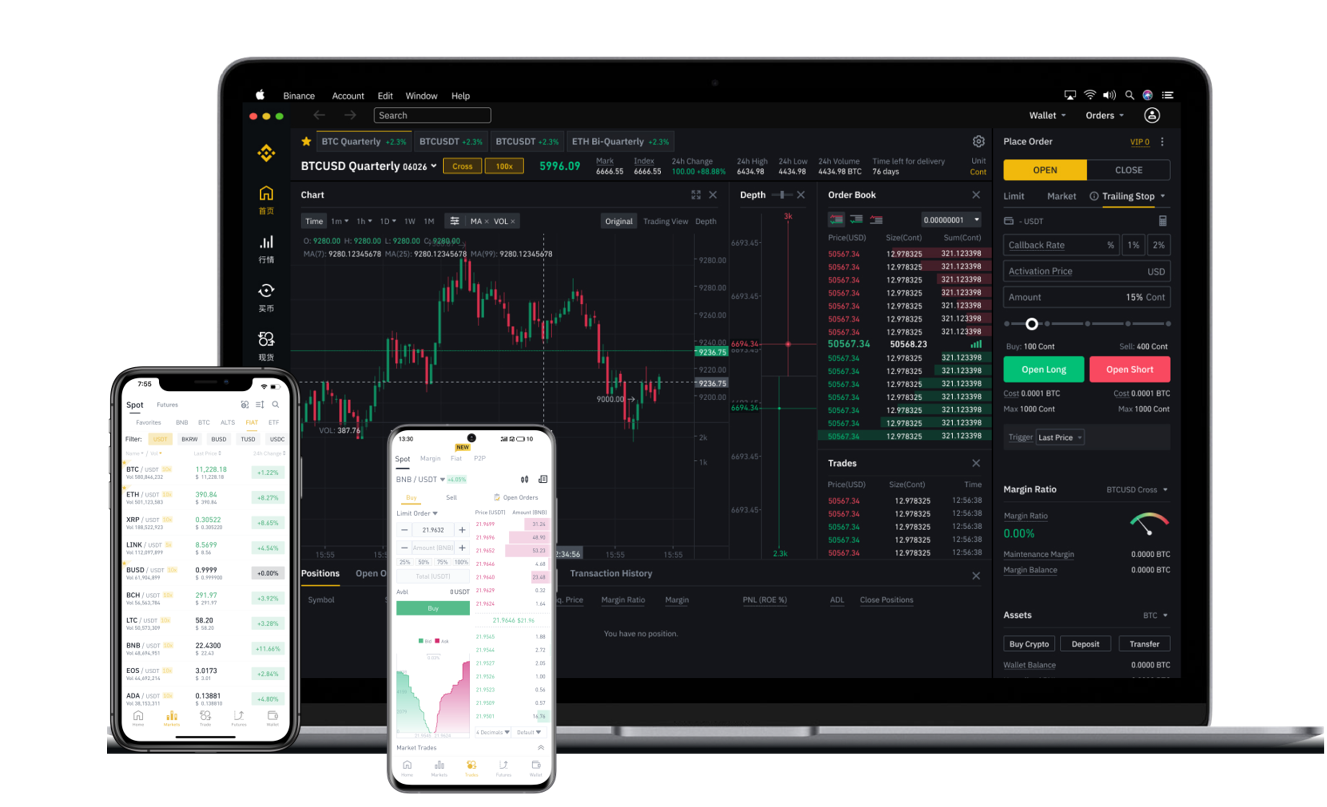
How to Use Binance Cryptocurrency Exchange: A Step-by-Step Guide for Beginners

Binance, one of the world’s largest and most popular cryptocurrency exchanges, offers a wide range of trading options, from spot trading to futures, staking, and more. For newcomers, understanding how to navigate the platform can seem daunting. This guide breaks down the essential steps to start using Binance effectively, ensuring you can trade cryptocurrencies with confidence.
First, you need to create a Binance account. Visit the official Binance website or download the mobile app. Click “Register” and enter your email address or phone number. After setting a strong password, you must complete a verification process. Binance requires identity verification (KYC) to comply with global regulations. You will need to upload a government-issued ID and take a selfie. This process usually takes a few minutes to several hours, depending on traffic. Once verified, you can deposit funds into your account.
Depositing funds is straightforward. On the “Wallet” or “Deposit” page, select the cryptocurrency you want to deposit, such as Bitcoin (BTC) or Ethereum (ETH). Binance will generate a unique deposit address. Copy this address and use it to send funds from an external wallet or another exchange. Alternatively, you can deposit fiat currency (like USD or EUR) via bank transfer, credit card, or third-party payment processors. Note that fiat deposit options vary by region.
After funding your account, you can start trading. The most common method is spot trading. Navigate to the “Trade” section and select “Spot”. The interface shows a price chart, order book, and trade form. You can place a market order (buy or sell at the current market price) or a limit order (set a specific price at which you want to trade). For beginners, a market order is simpler. Choose your trading pair (e.g., BTC/USDT), enter the amount, and confirm the trade. Always double-check the fees—Binance charges a maker/taker fee, typically 0.1%.
Security is critical when using Binance. Enable two-factor authentication (2FA) via Google Authenticator or SMS immediately. Also, use the “Withdrawal Whitelist” feature to restrict withdrawal addresses. Avoid storing large amounts of cryptocurrency in your Binance wallet for extended periods; consider moving funds to a private cold wallet (like a Ledger or Trezor) for long-term holding. Binance also offers a “Secure Asset Fund for Users” (SAFU) as an extra layer of protection, but personal security habits are more important.
Beyond trading, Binance offers other valuable features. You can use “Earn” to stake cryptocurrencies and earn interest, or participate in “Launchpad” to get early access to new token projects. The “Convert” feature lets you swap one crypto to another instantly without a traditional order book. For advanced users, “Futures” and “Margin” trading provide leverage, but these carry high risk and are not recommended for beginners.
A common mistake new users make is falling for phishing scams. Always access Binance by typing the official URL manually (binance.com) or using the official app. Never click on links from emails or messages claiming to be from support. Binance will never ask for your password or 2FA codes. Also, be mindful of withdrawal fees and network fees—they vary by cryptocurrency and current network congestion.
In summary, using Binance involves four core steps: account creation with KYC, depositing funds, trading on the spot market, and prioritizing security. Start with small amounts to test the process, explore educational resources on Binance Academy, and gradually expand your activities as you gain experience. Binance’s platform is powerful, but with careful practice, you can navigate it safely and efficiently.